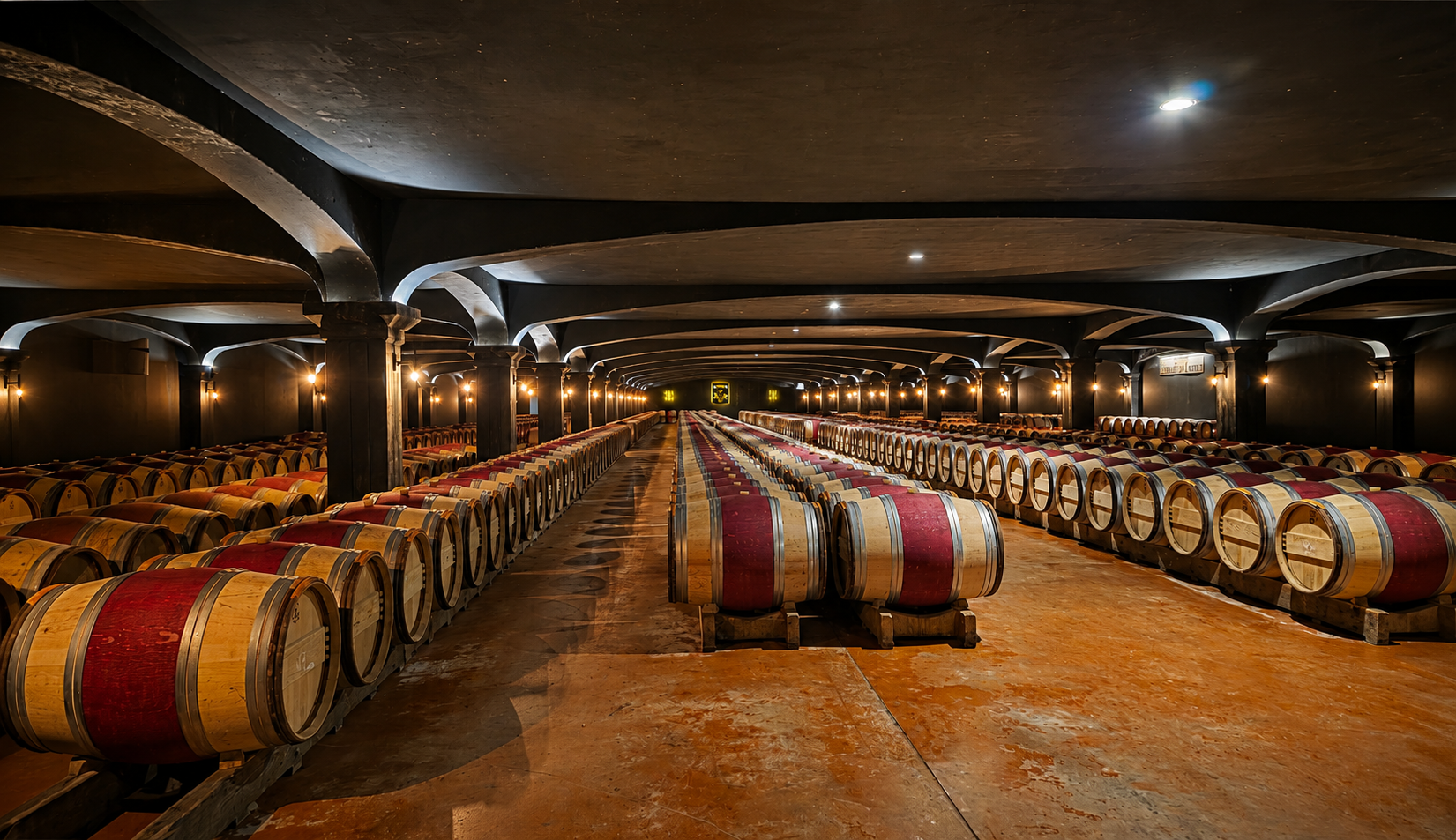
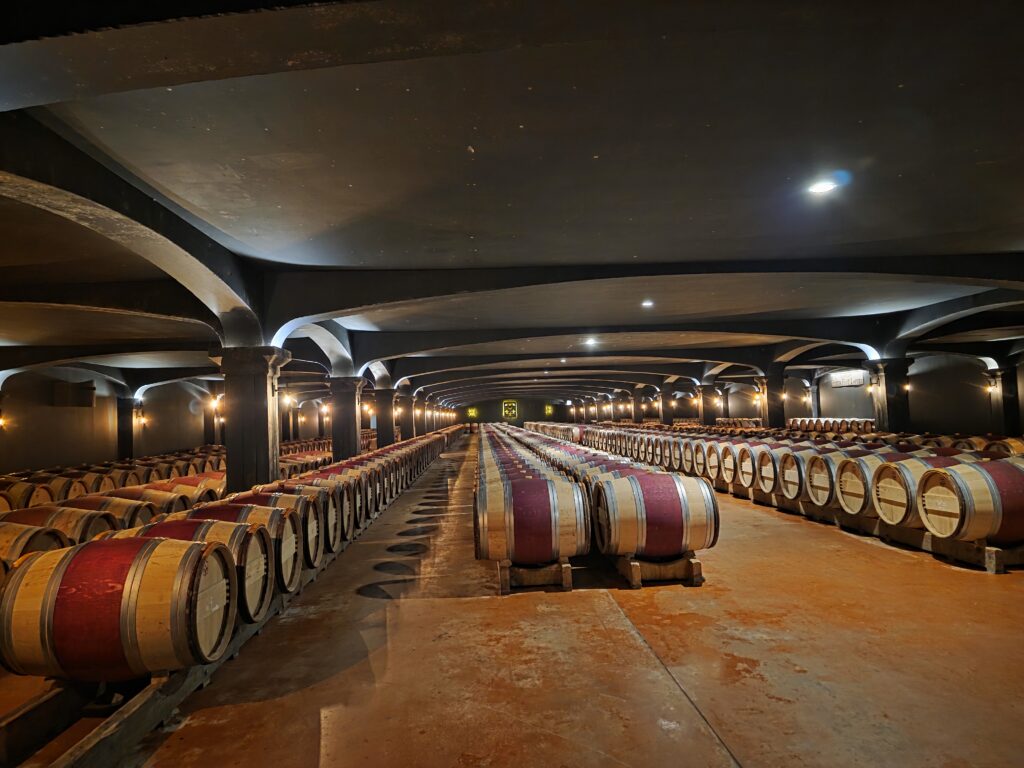
There is a particular kind of quiet that settles over you in a two-hundred-year-old wine cellar, standing between two rows of barrels stretching farther than you can see in either direction. I found that quiet more than once this week in Bordeaux, and it is exactly the kind of moment I want every client to experience at least once.
I have traveled to a great many wine regions over the years planning luxury travel for clients, and Bordeaux is a special place — partly because the region keeps changing in small ways worth knowing about firsthand, and partly because it is one of the few places where a single afternoon can move you from a grand 18th-century city square to a working vineyard without ever quite losing the thread of history connecting the two.
Bordeaux, the City
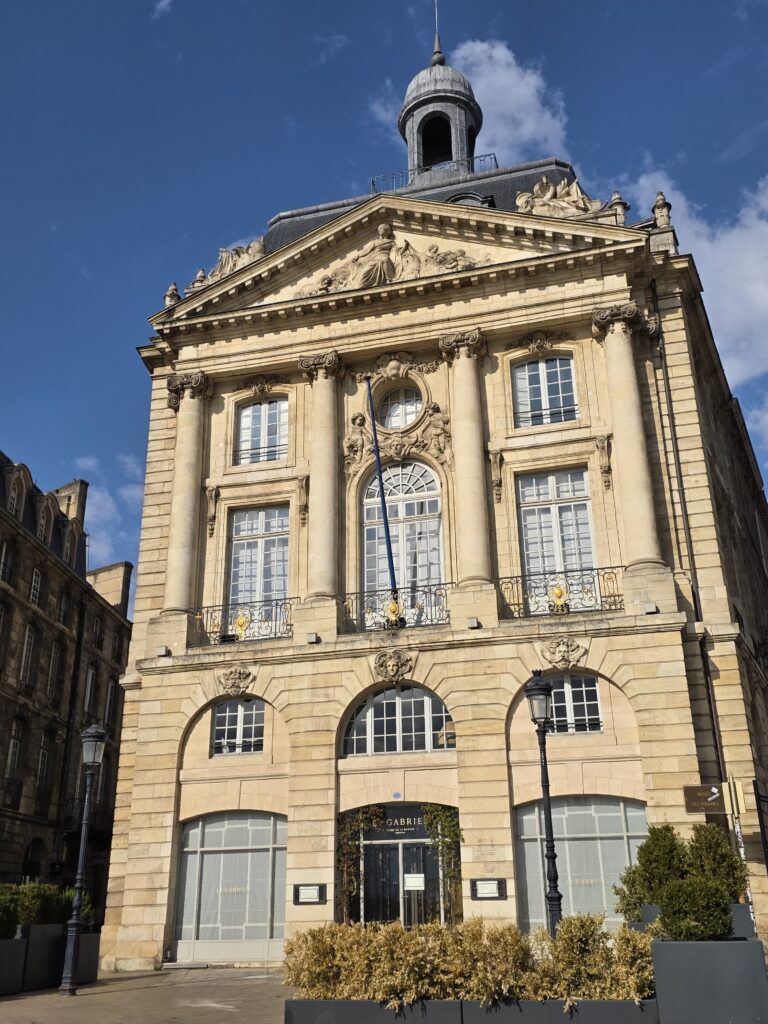
Bordeaux itself is easy to underestimate if you only think of it as a gateway to the vineyards. The city center is a UNESCO World Heritage site, and its golden limestone facades — cleaned and restored over the past two decades — have turned what was once a quietly overlooked port city into one of France’s most elegant urban centers. A sleek modern tram now glides silently past buildings that have stood since the 1700s, and the effect is disarming in the best way: nothing here feels like a museum piece, even though most of it technically is.
The various buildings with grand stone facades facing the Garonne River, are a perfect first stop: equal parts working port history and architectural showpiece, and a good reminder that Bordeaux’s wealth was built on trade long before it was built on wine. Just across the water, the city’s famous Miroir d’Eau — a shallow reflecting pool that turns the entire square into a mirror image of itself — draws in exactly the kind of unhurried early-evening crowd that tells you a city has its priorities right.
The Drive Out: Vintage Style
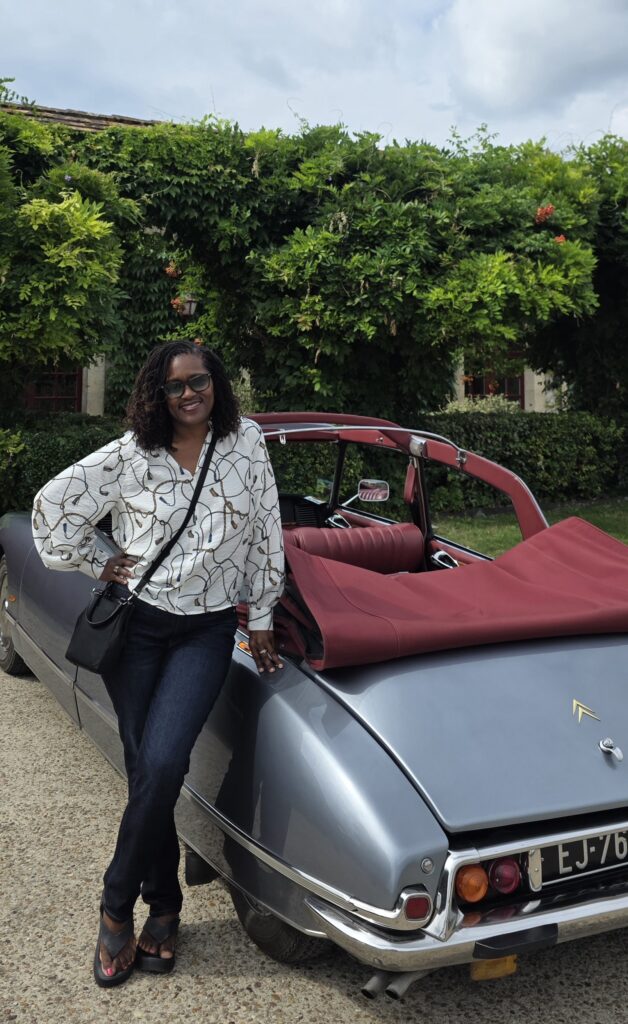
The best way I have found to cross from the city into wine country is also the most fun: by vintage convertible. I spent an afternoon touring the vineyards of Pessac-Léognan in a beautifully kept Citroën DS, top down, the countryside opening up in exactly the unhurried way it should.
There is something about doing it this way, rather than from behind the tinted windows of a private car, that changes the whole feel of the afternoon. The roads narrow and start winding through tunnels of plane trees almost as soon as you leave the city, and the temperature seems to drop a few genuinely welcome degrees under the canopy. It is slower than it needs to be, in the best possible sense — which is really the entire point of choosing the wine country as a destination in the first place.
Château Smith Haut Lafitte
Château Smith Haut Lafitte is a classified growth of the Graves appellation, in the Pessac-Léognan district just south of Bordeaux, known for both its reds and its whites. The estate is as beautiful to walk through as its wine is to drink — a working property that clearly takes as much care with the experience of a visit as it does with what ends up in the bottle.
The same family behind the estate also created Les Sources de Caudalie, the spa and hotel on the property built around vinotherapy — skincare and treatments developed from the same grapes growing just outside. It is a genuinely clever piece of hospitality: the estate does not simply sell you a bottle at the end of a tour, it gives you an entire, unhurried day built around the vineyard, from cellar to table to spa treatment, without ever feeling like a sales pitch.
What stayed with me longest, though, was the property’s bottle library — rows of vintages reaching back well over a century, dust and all. Somewhere in that collection sits a bottle from 1878. Standing in front of it is a genuinely strange feeling: that bottle was already old when most of the wine world’s modern history hadn’t happened yet.
A cellar master walked us through a small tasting of a much younger vintage using an antique wine cradle — a hinged brass frame that lets you tip and decant an older bottle in one smooth, controlled motion, without ever disturbing the sediment that settles at the bottom over decades in the bottle. It is a small, almost ceremonial piece of equipment, and watching it used properly told me more about how seriously this estate treats its older vintages than any tasting note could have.
My favorite part of this particular tour was observing the factory where the aging barrels are hand made from wood for each harvest. With a (never empty) glass of wine in hand, I could have watched him make barrels all day. So fascinating!
Château Carbonnieux
A short drive away sits Château Carbonnieux, another classified Pessac-Léognan estate and one of the oldest in the region, with a history that traces back to Benedictine monks who once tended these same vines. The rows of vines running right up to the property’s facade make for one of the more striking approaches of the trip — vineyard in the foreground, centuries of history in the stone behind it.
There is a particular pleasure in visiting an estate with this much continuity behind it. Long before Bordeaux wine had the international reputation it carries today, properties like this one were already quietly refining the same craft, generation after generation, on the same stretch of gravelly soil. It is easy to talk about Bordeaux’s history in the abstract; it is another thing entirely to stand in a vineyard where that history is simply the ordinary, everyday backdrop.
A Toast to History
It is easy, reading about Bordeaux from a distance, to reduce it to a checklist: this appellation, that classification, this vintage. Standing in a cellar with a bottle nearly a century and a half old changes that. Bordeaux does not just make wine — it keeps a kind of physical record of time passing, one vintage at a time, and there is something genuinely moving about being trusted to stand in the room with it.
It is also, I think, the best argument for visiting a wine region in person rather than simply ordering the bottle at home. A glass of wine tastes exactly the same whether or not you have seen the cellar it aged in, but something about having stood in that cellar, having seen the dust and the handwritten vintage labels and the particular quality of light through a small cellar window, changes how the wine sits with you afterward. It stops being a label and starts being a memory.
Planning Your Own Bordeaux Trip
A few things worth knowing before you go. Harvest season, typically from mid-September through October (but scheduled for August in 2026 thanks to climate change), is the most popular time to visit and the vineyards are at their most photogenic, but it is also the busiest and least flexible time to secure appointments at the top estates. Late spring and early summer offer greener vines, comfortable weather, and considerably more availability.
Most of the well-known châteaux only welcome visitors by advance reservation — walking up unannounced rarely works, especially at the more prestigious classified estates, and the best appointments are often set weeks or months ahead. A number of properties offer private tastings and behind-the-scenes access that never appears on their public booking calendar at all, which is exactly where a luxury travel advisor earns their keep.
It is also worth deciding early whether to base yourself in Bordeaux city and day-trip into the surrounding districts — Pessac-Léognan, the Médoc, Saint-Émilion — or to stay directly among the vines in a boutique hotel. Both work well for different travel styles, but either way, plan for a private driver. Between multiple tastings across the day, the single biggest headache of wine country is the drive back, and it is worth removing entirely.
One more practical note, easy to forget in the moment: if you fall in love with a bottle at an estate, ask before you leave about shipping it home rather than carrying it in your luggage. Most established properties are well set up to ship internationally, and it saves you from finding out at airport security that your favorite bottle from the trip did not survive the flight. With current taxes and tariffs, smuggling luggage in your suitcase is the cheaper, albeit riskier, bet. I use these bags to bring bottles home safely in my checked luggage.
Bordeaux also happens to be a wonderful choice for a honeymoon or anniversary trip — quieter and more intimate than Paris, without sacrificing any of the romance, and easy to fold into a longer Europe itinerary if you want to add a few more days elsewhere. For a different pace entirely, a river cruise along the Gironde and Dordogne is a lovely way to see several appellations without ever repacking a suitcase.
Bordeaux rewards a little bit of planning far more than most destinations do — the difference between a pleasant weekend and an extraordinary one usually comes down to which cellar doors open for you, and which ones stay closed.
Dreaming of your own trip through French wine country? Book a complimentary 30-minute consultation and let’s design it together.